
Building trust isn’t just one piece of the puzzle; it’s the foundation of a thriving E‑commerce Marketing strategy. Customers who feel confident in your brand will buy more, stay longer, and become advocates for you. What follows is a detailed, human-centred guide on how to build trust through authentic e-commerce marketing , using simple language and real-world thinking. Along the way we’ll touch on key concepts like e commerce online marketing, e commerce market trends, marketing for e-commerce website, email marketing in e-commerce, woocommerce marketing online, market segmentation, and online store marketing.
1. Why Trust Matters in E-commerce Marketing
When someone lands on your online store, they don’t just evaluate price or catalogue , they evaluate whether you as a brand are credible, reliable and worth their time and money. In the e-commerce marketing world, that means:
- Delivering a seamless experience from browsing to checkout.
- Communicating clearly about your product, your values and what you stand for.
- Having visible social proof (reviews, ratings, testimonials).
- Being open about fulfilment, returns, shipping, and all the fine print.
If any of those are weak, trust frays , and in online purchase decisions, trust is often the tipping point between clicking “buy” or leaving. By putting it front and centre in your marketing for a e-commerce website, you’re setting up a strong foundation.
2. Understand Your Audience (Market Segmentation)
One of the first steps in building trust is showing your customers that you understand them. That means applying market segmentation: dividing your audience by meaningful groups (age, location, shopping behaviour, product preferences) so you can tailor your messaging.
For example:
- Group A might be frequent shoppers who respond well to loyalty incentives.
- Group B might be first-time buyers who need reassurance (clear return policy + user reviews).
When you tailor your e commerce online marketing to specific segments, you show empathy and understanding. That perception of “you get me” fosters trust.
3. Be Transparent with Your Offerings
Within the world of online store marketing, nothing undermines trust faster than hidden fees, unclear shipping times or unclear item depictions.
Authenticity requests: Clear item subtle elements: estimate, colour, fabric, shipping timeline. Unmistakable return or discount approach.
Communication when anything changes (e.g., Shipment postponed by 2 days due to….,)
Over time, transparency becomes a differentiator and your brand builds credibility , which in turn strengthens all your e-commerce marketing efforts.
4. Leverage Email Marketing in E-commerce
One of the core tools of email marketing in e-commerce is trust-building. But it must be used wisely. Here’s how to use it authentically:
- Send welcome emails that explain your brand story and why you care about quality or service.
- Use segmentation: send different emails to first-time buyers vs repeat customers (see above).
- Offer value: educational content, product tips, gentle upsell, not just “buy now” blasts.
- Be consistent and honest: If you promise something (“ships in 24 hours”) make sure you deliver.
When you use email as a relationship-builder rather than just a sales channel, you deepen trust and encourage long-term loyalty.
5. Website + Checkout Experience
Your site is your computerized storefront. In WooCommerce showcasing online (on the off chance that you are utilizing WooCommerce), or any stage, the client involvement specifically impacts belief. Highlights:
- Fast loading speed, mobile-friendly design.
- Secure checkout (SSL certificate, clear payment options).
- Clear “About us”, “Contact us”, “FAQ” pages.
- Live chat or easy-to-access support.
- Simple navigation and minimal distractions.
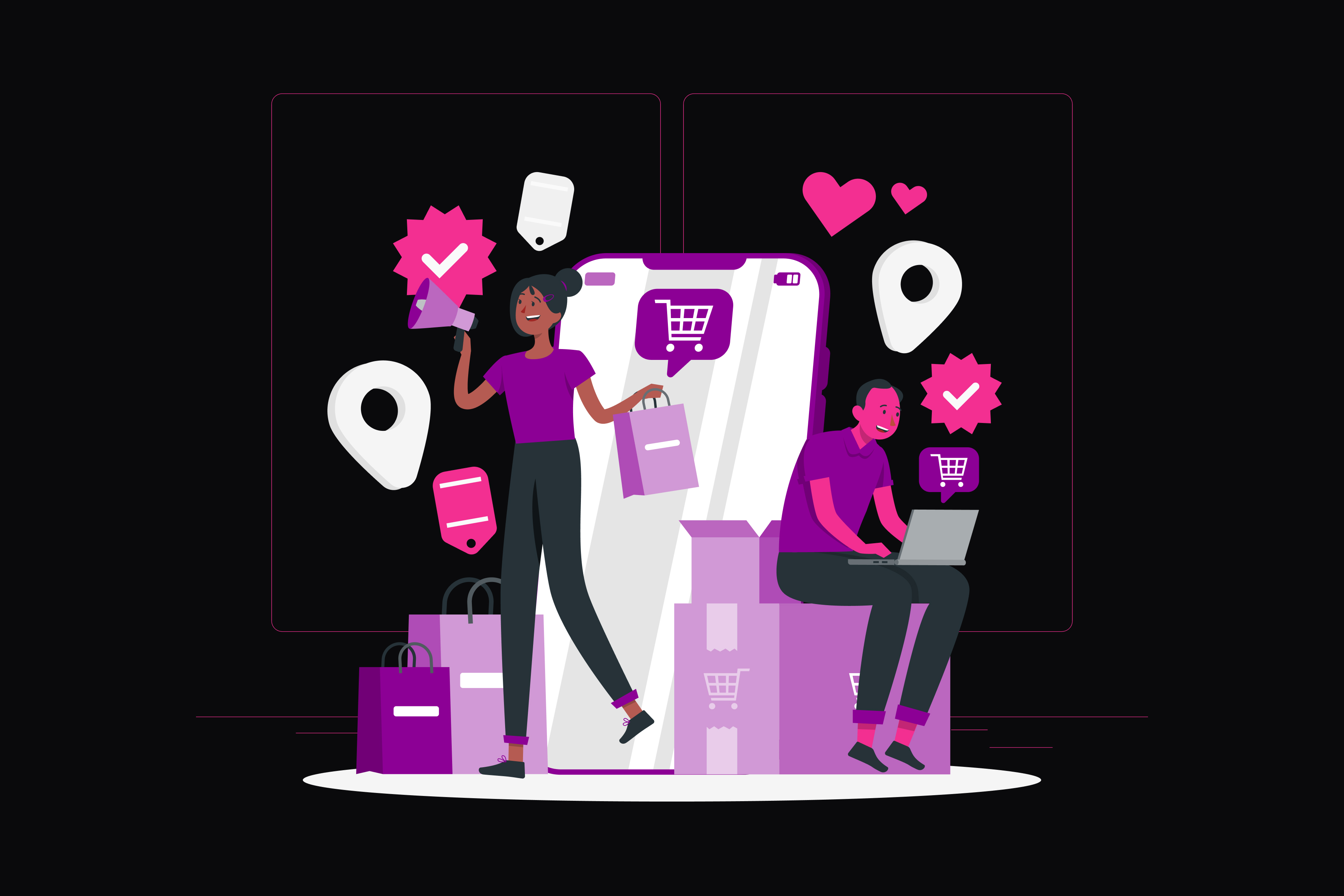
These elements show you care about the customer’s experience. A glitchy site or confusing checkout erodes confidence big time.
6. Use Social Proof & User-Generated Content
Authentic voices build trust. In e-commerce marketing, one of the most effective tactics is user-generated content (UGC) and social proof: reviews, testimonials, unboxing videos, real-world photos. When someone sees someone like them using your product, they feel more comfortable buying. Incorporate this into your online store marketing by:
- Displaying honest reviews on product pages.
- Encouraging customers to share their experience on social.
- Featuring “real customer” stories (with permission).
This kind of authenticity strengthens your brand’s credibility and complements your broader marketing strategy.
7. Stay Ahead of E-commerce Market Trends
If you’re serious about trust and growth in e-commerce marketing, you can’t ignore e commerce market trends. Some of the key trends today are:
- Mobile commerce growth: many purchases happen on smartphones.
- Personalisation using data: offering tailored recommendations and communications.
- Omnichannel experience: customers expect seamless transitions between social, web, email, and mobile.
The importance of trust, privacy and strong brand values: consumers increasingly care about authenticity and ethics.
Incorporating these trends into your marketing for e-commerce website reassures customers you’re not just present , you’re relevant, modern and responsive to their needs.
8. Content & Storytelling
A powerful way to build trust is through content that speaks to values, backstory, and human-connection. In your e-commerce marketing, this looks like:
- Blog articles or videos explaining how products are made, who is behind the brand.
- Stories about your customer community.
- Transparency on how you source materials or how your company operates.
- Helpful guides rather than just promotional materials.
When you shift from “buy this product” to “let us show you why we exist, why we care, why we’re different” you open the door to meaningful relationships , which then strengthen your online store marketing.
9. Personalisation and Retention Over Just Acquisition
Too many businesses focus solely on getting new customers. But for trust and long-term success in e-commerce marketing, retention matters just as much. Steps to focus on:
- Use data (when done ethically) to personalise offers and communications.
- Develop loyalty programmes , reward repeat purchases.
- Reach out to past customers with helpful content, updates on new lines, exclusive previews.
- Solve issues proactively: if a customer raises a concern, address it quickly and publicly if possible.
When keeps the first-time buyer coming back, they start trusting you not just as a store , but as a brand they can rely on.
10. Measure, Learn and Adapt
Authentic marketing means you’re willing to listen, learn and evolve. For your e-commerce marketing strategy this means:
- Track metrics beyond just traffic, monitor conversion rates, average order value, repeat purchase rate.
- Test different approaches (A/B testing for email subject lines, website layout, promotions) to see what resonates.
- Listen to customer feedback , reviews, support tickets, social media comments , and act on them.
- Adapt your messaging and offering over time, as your audience and market shifts.
When customers see you upgrading, listening and improving, trust deepens because it shows you’re committed, not just chasing sales.
11. Aligning All Touch-points for Consistent Experience
Trust breaks when messages conflict. If your social feed says “premium quality” but customer support is slow, that misalignment undermines everything. So in your online store marketing efforts:
- Ensure consistency across channels: website, social, email, packaging.
- Your tone, values, visual identity and promises should all reinforce each other.
- If you use platforms like WooCommerce, ensure your backend operations (shipping, returns) live up to what your marketing claims.
When everything aligns, your brand becomes reliable and predictable in a positive way , and that breeds trust.
12. Ethical Practices & Customer-Centricity
Authenticity and trust are increasingly about ethics. As you build your e-commerce marketing playbook:
- Be transparent about sourcing, materials, manufacturing practices.
- Respect customer data: be clear about how you use it, give opt-outs.
- Be ready to do the right thing when things go wrong, refund, replace, apologise.
- Prioritise customer experience and lifetime value over one-time sales.
Brands that stand for something, past fair benefit, frequently draw in more profound dependability. That believe gets to be a competitive advantage.
13. Specific Tactics That Build Trust
Let’s highlight a few concrete tactics you can apply within your e-commerce marketing framework:
Welcome sequence with brand story: use email marketing to introduce new subscribers to who you are, not just what you sell.
Post-purchase follow-up: ask for feedback, offer tips how to use the product, provide care/maintenance guides.
Transparent shipping & delivery updates: don’t wait for customers to ask where their package is.
User-review focused product pages: allow customers to post images, honest comments; respond to negatives with solutions.
Segmentation + personalised offers: send discounts to those who haven’t bought in a while; special VIP perks to loyal customers.
Cross-channel consistency: if you run an ad on Facebook promising “free shipping” make sure your website checkout shows it too.
Content marketing supporting your product: write blogs or videos about how to get the most out of a product, industry insights, “why we care” pieces.
All these play into trust-building while moving your e commerce online marketing from generic to meaningful.
14. Putting This Into Practice: Your Step-by-Step Roadmap
Here’s a simplified roadmap you can follow:
- Audit your current experience: website, checkout, emails, social feed , where is trust weak?
- Define your customer segments and map messaging accordingly.
- Tell your authentic brand story through content on your site and email sequences.
- Improve website experience: mobile friendly, fast, clear policies, easy navigation.
- Deploy email campaigns that nurture first-time buyers and reward loyal ones.
- Solicit and display user reviews and UGC.
- Run regular reports on conversion, retention, complaints, return rates , and act on them.
- Stay alert to e-commerce market trends (like mobile commerce, omnichannel behaviour, AI personalisation) and adapt.
- Ensure all channels align (social, website, email, packaging, support).
- Celebrate small wins: every positive review, repeat purchase, or improved checkout conversion is sign of trust rising.
Stick with this approach, and your e-commerce marketing effort transforms from transactional to relational; you’re not just selling, you’re partnering with your customer.
Why Partnering with Prismatic Digital Solution Elevates Your Trust-Driven E-commerce Marketing
At Prismatic Digital Solution, we believe trust is the currency of long-term success in the digital commerce world. Here’s how we help you build it:
- We map your customer segments and tailor your messaging, so your e-commerce online marketing speaks to your audience, not at them.
- We audit and optimise your website and checkout flow (including platforms like WooCommerce) to ensure your WooCommerce marketing online is seamless and secure.
- We design full-funnel email programmes for acquisition, nurturing, conversion, and loyalty, delivering on what email marketing in e-commerce promises.
- We stay ahead of e-commerce market trends and integrate them into your strategy so you’re not just following the pack, you’re leading it.
- We craft content and story-driven campaigns that weave your brand values into your online store marketing, so customers feel a connection that goes beyond the product.
- We monitor, measure, and evolve with you , ensuring your marketing for an e-commerce website is not static, but agile and built for sustained growth.
Let’s build a strategy together that turns visitors into believers and buyers into ambassadors.
FAQs
Q1: What exactly is e-commerce marketing?
A1: It’s the set of tactics and strategies designed to drive awareness, traffic, conversions and loyalty for an online store , from website SEO to email campaigns to social presence.
Shopify
Q2: How does market segmentation help in e-commerce marketing?
A2: By dividing your audience into meaningful groups, you can tailor your messaging and offers to each segment’s needs and behaviour. That shows empathy and relevance, key ingredients of trust.
Q3: Why is email marketing still important for an online store?
A3: Because it’s direct, personal, and cost-effective. It lets you build relationships, not just one-time sales, and nurture repeat customers, which boosts lifetime value and trust.
Q4: What are the current e-commerce market trends I should care about?
A4: Mobile commerce is growing, personalisation is expected, omnichannel experiences matter, and consumers favour brands with strong values.
Q5: How do I know if my e-commerce marketing is building trust?
A5: Look at metrics like repeat purchase rate, customer reviews and sentiment, referral traffic, and reductions in customer complaints or returns. These reflect deeper trust beyond just initial sales.
 Chat with Prismatic Bot